The past several days have been awash in noise and commotion—in what has become a never-ending saga of surprise after surprise.
On Sunday, while mowing the grass, I noticed a dead branch high in one of our massive oak trees. It had completely snapped off and was probably 10 inches thick or more. Thankfully, another branch caught it, preventing it from crashing onto our neighbor’s property, garden, or shed.
Over the past couple of months, we’ve had numerous storms and strong winds, so I imagine it may have been that way for a while, unnoticed until the leaves turned brown and caught our attention. And, as one would expect, that discovery causes you to look around a little more carefully.
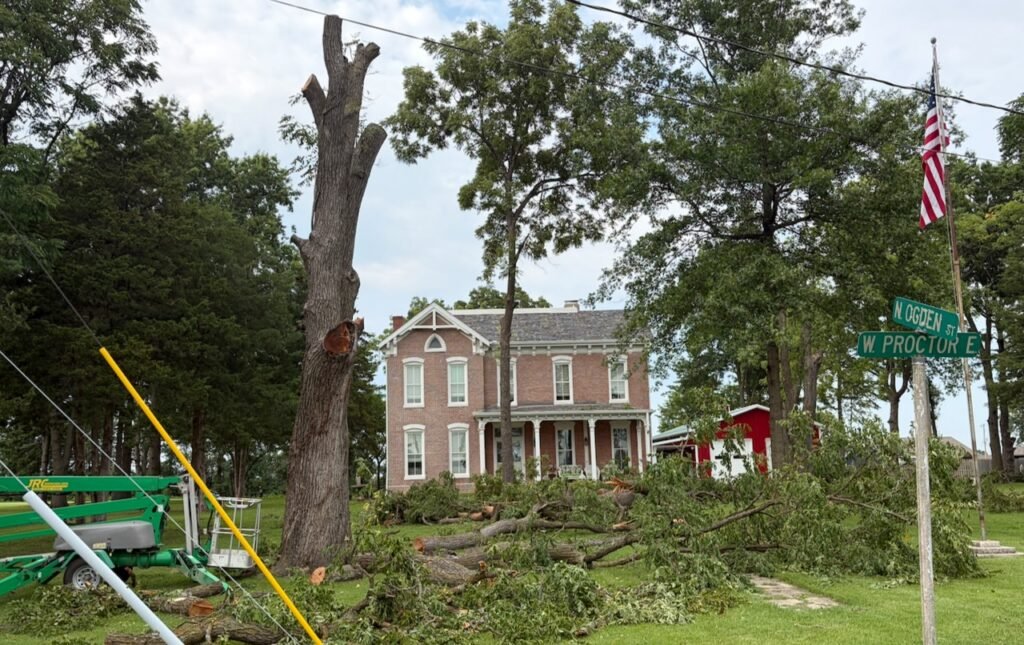
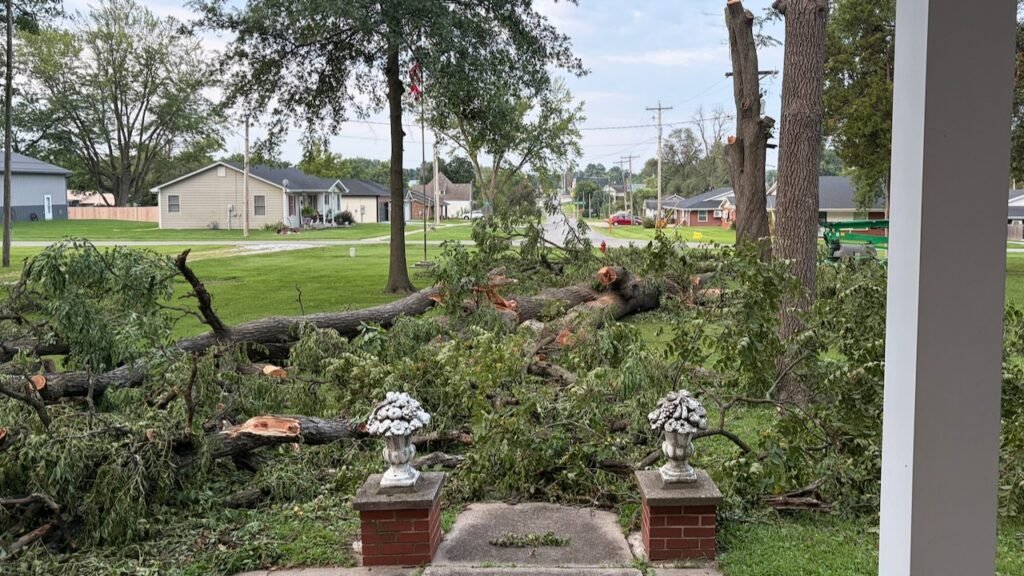
Since we moved here 18 months ago, we’ve been trying to nurse along several neglected, 100-plus-year-old trees in our front yard. These Kentucky coffeetrees are massive—at least five feet in diameter. We’ve had a certified arborist inspect and trim them several times since we took over, losing one to disease about a year ago.
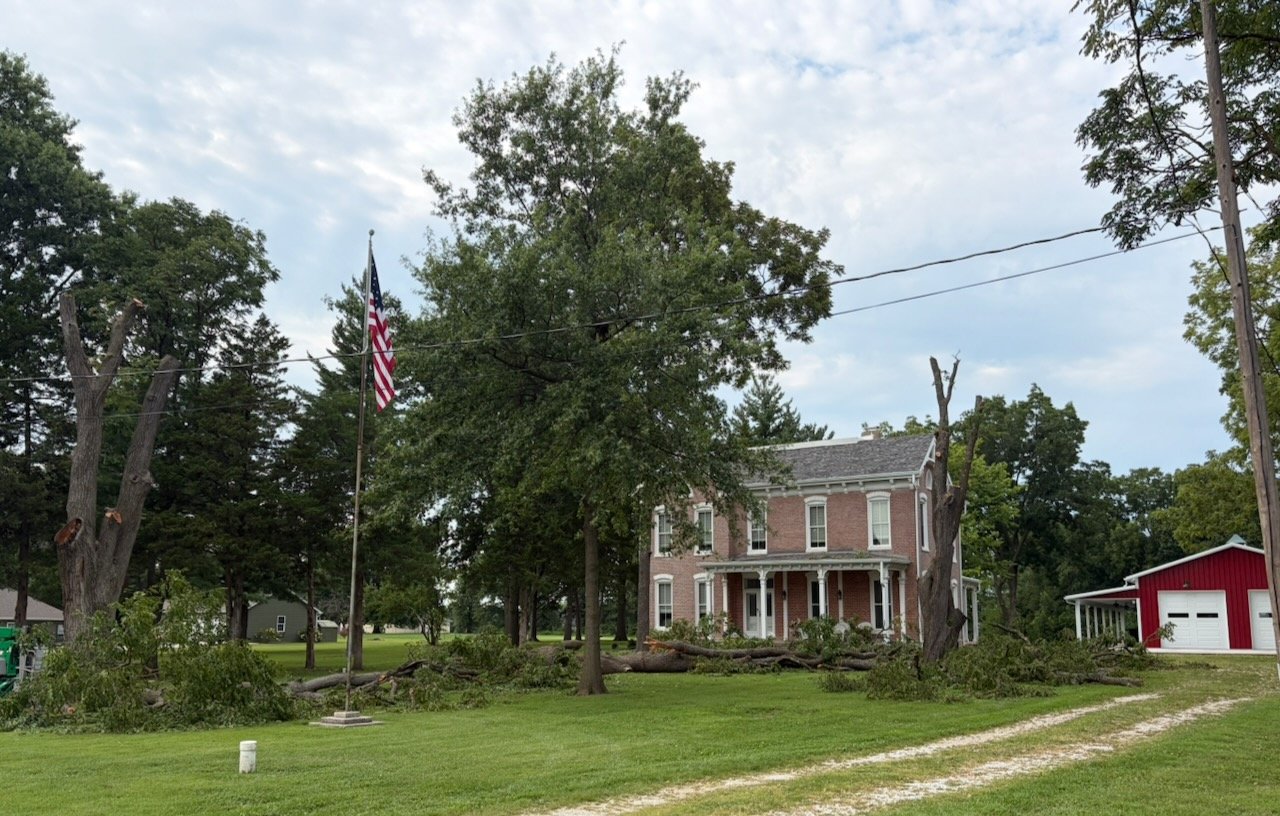
Well, as luck would have it, the largest tree—and the one closest to the house—was showing continued signs of insect damage and was clearly leaning more than it had before. So, getting to the point, it was time to let them all go.
We don’t know for certain, but given their size and placement in the yard, it’s easy to imagine that the Proctor family intentionally planted these trees not long after building the house. Kentucky coffeetrees typically live approximately 100 to 150 years, so the timing makes sense.
Losing these trees was emotionally draining for Sheri and me, but we knew it was necessary despite our attachment to them. On the positive side, removing them has opened up the front yard, and the house is now far more visible as you come up the main street through town.
In a way, I think it also signifies the new life we’re trying—desperately—to breathe into this old place.